
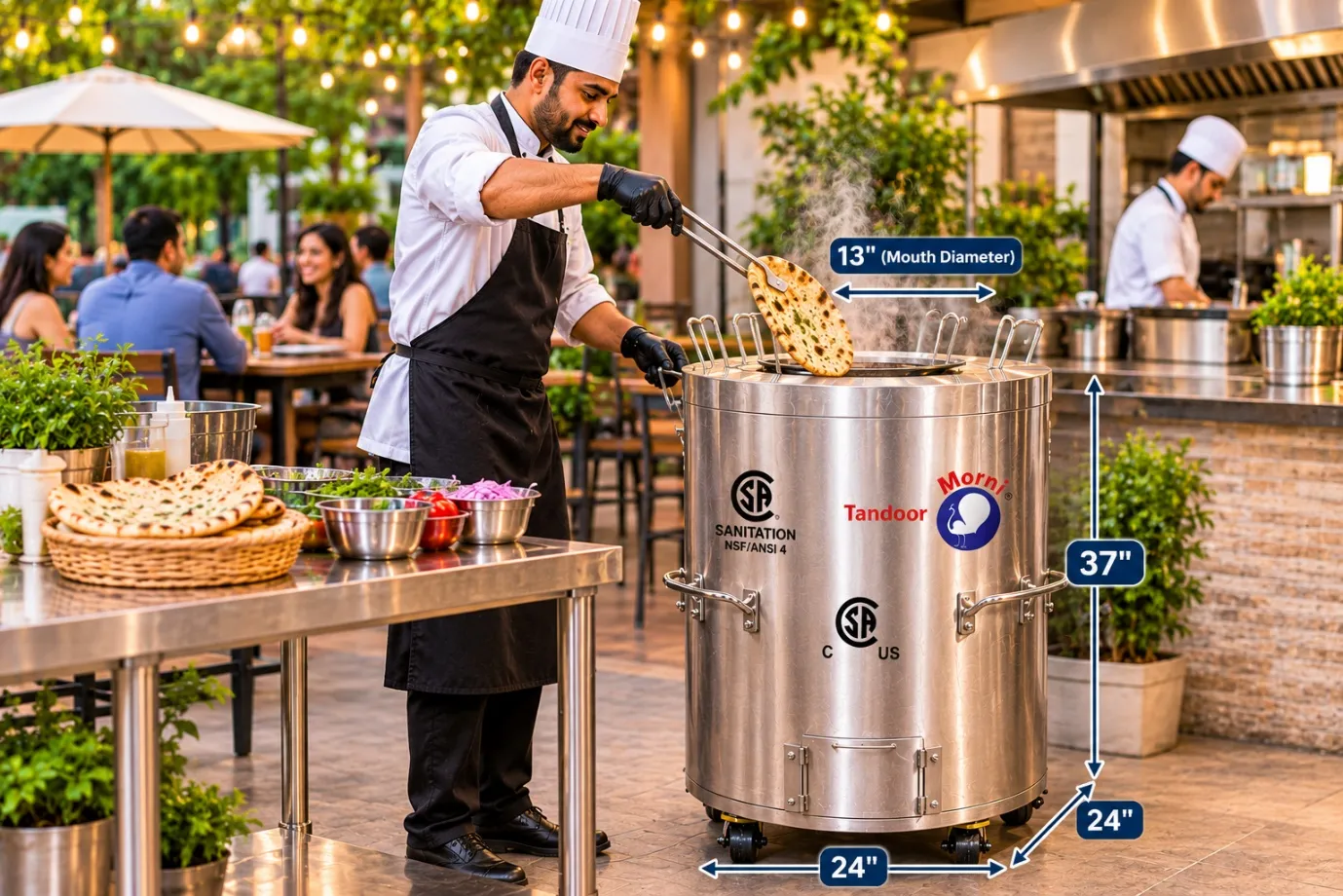
Commercial Tandoor
It is 7:45 on a Saturday night, and every table seems to have ordered naan at once. The commercial tandoor is hot, but the cook is waiting on marinated chicken, clean skewers, and a free hand. Busy service rarely falls apart because of the oven itself. It falls apart because the work around tandoor ovens is unorganized. A commercial tandoor can only move as fast as the kitchen feeding it, so the habits below focus on flow rather than gadgets, and each one is simple enough to test during your next dinner rush.
Prep the Station Before the First Ticket Prints
Good service begins an hour earlier. Light the commercial tandoor on schedule, check the fuel or gas supply, and let the chamber reach working heat before orders arrive. Rushing this step is a common reason the first tickets run slow.
Set out skewers, gloves, brushes, bread cushions, and a damp cloth within arm’s reach. Walking away from the oven to hunt for a tool costs seconds, and those seconds add up all night. Tidy stations make tandoor ovens and skewers easier to manage.
Kitchens that rely on commercial tandoor ovens for their signature dishes benefit most from this routine. A station arranged the same way every day lets any cook step in without guessing, even on short notice.
Pre-Portion and Marinate in Batches
Marinated meats and paneer taste better when they have time to rest, and they cook faster to order when portions are ready. Divide them into trays by skewer load so nobody is measuring during service. Cooks can then load skewers in seconds instead of minutes. Skewers can wait in a chilled tray until the commercial tandoor is ready for them.
Label each tray with the time it was prepared so older stock is used first. Follow your local food safety rules on holding temperatures and cold storage. Keep raw and ready items clearly separated.
Dough balls deserve the same treatment, rolled and covered before the rush. When the commercial tandoor is running at full heat, nobody should be weighing dough or trimming meat. That work belongs to the quiet hours.
Sequence Orders by Cooking Time
A ticket with naan, kebabs, and a larger chicken portion contains three different clocks. Bread finishes in minutes, while bigger cuts on skewers need considerably longer. Ordering them correctly is half the battle.
Start the slowest skewers first and add bread and other quick items as the slow ones near completion. That way, the whole table’s food leaves together instead of arriving in separate waves.
A short priority list pinned beside the oven keeps this rhythm simple. A restaurant running commercial tandoor ovens should also place the expediter within sight of the opening so timing stays visible to everyone. Fewer shouted questions mean fewer mistakes.
Keep Heat Steady While Doors Keep Swinging
Reaching in repeatedly and leaving the opening exposed changes conditions inside the chamber of a commercial tandoor. Cooks should learn to load efficiently and avoid lingering over the heat. Tandoor ovens reward quick, deliberate loading.
Watch the wall and the food instead of relying on guesses. Many cooks judge by how bread blisters and how quickly meat on skewers takes color, and those cues improve with practice. New staff should shadow an experienced cook before running the oven alone.
Staff trained on a commercial tandoor soon learn to read these signs. A quick check of the fuel supply before the rush also prevents surprising dips in the middle of service, when there is no time to fix them.
Divide Roles Around the Oven
One person should not marinate, cook, plate, and answer questions at once. Even in a small kitchen, splitting duties by task keeps the commercial tandoor from becoming a bottleneck.
A common arrangement is a tandoor cook, a helper who loads skewers and bread, and a runner who moves finished food. Adjust it to your headcount and menu. On slower nights, one person may cover two roles, and that is fine.
Teams working around commercial tandoor ovens should also agree on short verbal calls, such as “hot behind” and “bread up.” Clear words prevent burns and confusion, and they cost nothing to adopt.
Handle Bread and Skewers Without Collisions
Bread and skewers compete for the same space, so decide when each one goes in. Many kitchens run bread in short rounds between rounds of skewers.
Keep skewers organized by dish, and avoid crowding the chamber. Choose skewers that match the depth of the chamber so every item sits at the right height. Overloading makes items hard to turn and can lead to uneven cooking. A few well-spaced skewers usually beat a crowded chamber.
A cook handling a commercial tandoor during rush hour should always have a spare set of skewers ready. One loaded set can be pulled while another is being cleaned and reloaded. This keeps the rhythm unbroken.
Rest, Plate, and Hand Off Quickly
Food that leaves the oven should reach the guest while it is still hot. Set up a landing zone with trays, plates, and garnishes right beside the station.
Let meat from the skewers rest briefly if the recipe calls for it, then slice or plate it at once. Brush bread with butter or oil only when that is part of the dish. Keep the brush and bowl at the landing zone, not at the oven.
With commercial tandoor ovens, the gap between oven and table is the part most within your control. Short, clearly marked handoff paths protect all the careful cooking that came before. Cold plates and long walks undo good work quickly.
Clean as You Go Without Slowing Down
Ash, drips, and dough scraps build up quickly during service. Wipe surfaces and clear used skewers between rounds instead of leaving everything for closing time. A damp cloth within reach makes this easy.
Use tools designed for tandoor ovens, such as long skewers and heat-safe gloves, and keep heat protection in good condition. Never rush cleaning inside a hot chamber, and follow the manufacturer’s instructions for your model.
Cleaning in small steps keeps the commercial tandoor area safe. It also prevents the heavy end-of-night scrub that delays closing and tires the crew. Small habits make closing calmer.
Review Each Service and Adjust
After the last order, spend five minutes with the team. Note what ran late, what ran out, and what felt smooth. Honest feedback from the people at the commercial tandoor is worth more than any guess from the office.
Track a few simple details, such as peak order times and the dishes that caused delays. Patterns usually appear within a couple of weeks.
Restaurants that treat commercial tandoor ovens as part of a larger system, not a single machine, improve steadily. Small changes in prep, timing, or layout often matter more than new gear, and they cost far less to try.
Conclusion
A packed dining room tests habits more than the commercial tandoor itself. Teams that prepare skewers ahead, call orders in sequence, and talk clearly across the line tend to serve hot food with far less stress. Pick one idea from this list and try it this week, then add another. If you are also reviewing your cooking setup, the range at Tandoor Morni is a practical place to compare tandoor ovens once your workflow is clear. Calm service is built quietly, one small routine at a time, and the cooks who feel in control tend to stay longer.